
How In-Ear Monitors Protect and Enhance Your Performance
- October 29, 2026
- Reviewed by Paige Parker-Lewis
- 4 minute read
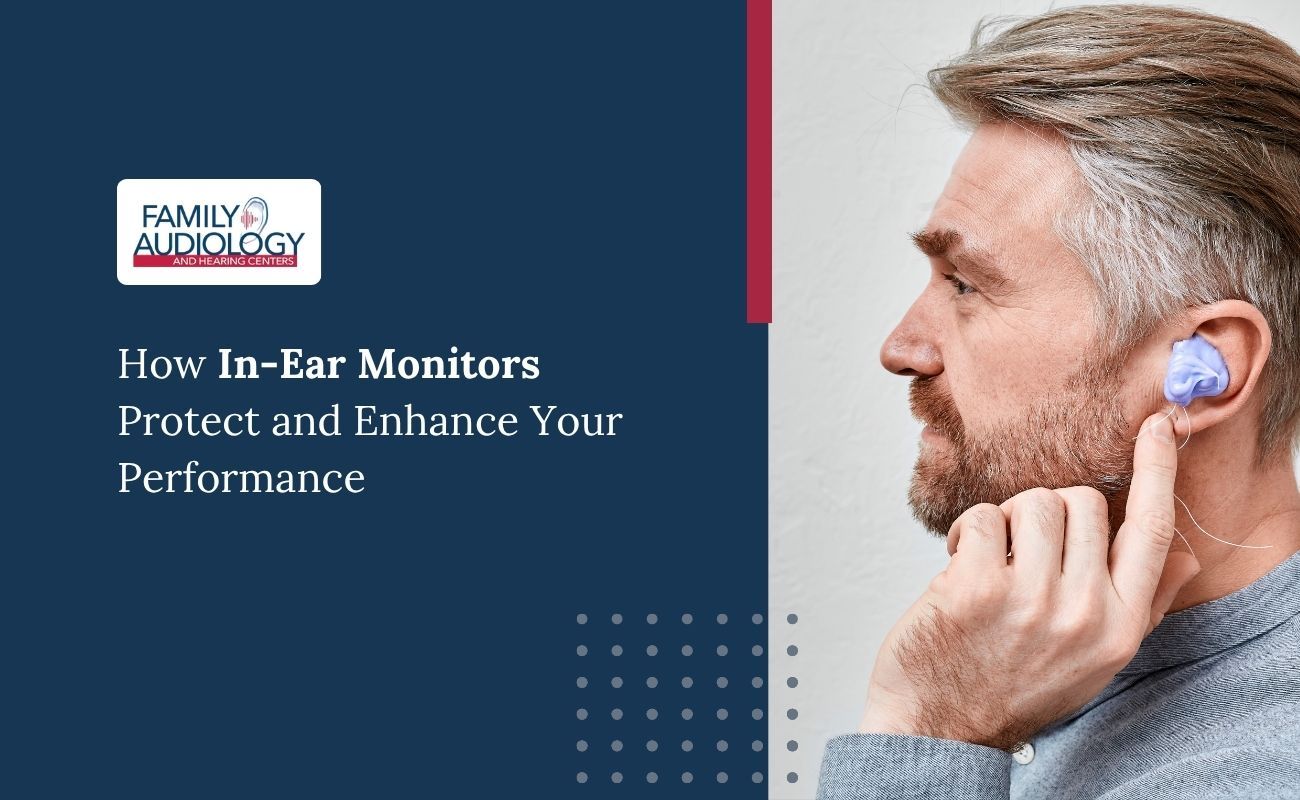
Standing in front of a wedge monitor blasting at 100+ decibels for three hours isn't just uncomfortable. It's the kind of exposure that adds up night after night, gig after gig, until a musician's hearing takes a hit they can't get back. If you're playing shows around Columbus, Dayton, or anywhere in between, custom in-ear monitors change that equation entirely.
Why Stage Volume Is the Real Enemy
Traditional floor monitors work by brute force. To hear yourself over the drummer, the guitarist, and the PA bleeding back at you, the sound tech cranks the wedges louder. Everyone on stage does the same thing, and the whole mix spirals upward. By the second set, you're not hearing music anymore. You're hearing noise.
Custom in-ear monitors solve this by delivering sound straight into a sealed ear canal, which means the mix arrives clean and controlled at a much lower volume. No fighting stage bleed. No cranking a wedge to compete with the amp behind you. Just the mix you actually need, at a level that won't leave your ears ringing on the drive home.
What Makes Them "Custom"
A generic earbud from a music store doesn't seal your ear canal the way a mold taken from your own ear does. Our audiologists take precise impressions so the monitor fits exactly to your anatomy. That seal is what blocks ambient stage noise in the first place, and it's what lets you dial in a monitor mix at a fraction of the volume a wedge requires.
Fit matters for comfort too. A three-hour set is a long time to have something jammed in your ear. Custom monitors are built to stay put and stay comfortable, whether you're a drummer moving constantly or a vocalist working the whole stage.
Getting the Mix Right on Stage
Fit is only half the story. The other half is what you're actually hearing.
Some performers want click track and their own vocal up front. Others want a fuller band mix with just enough of themselves to stay in pitch. There's no single right answer here, it depends on your instrument, your role in the band, and honestly just personal preference. Part of what we do during a fitting is talk through how you use your ears on stage, so the monitor you end up with actually works for your setup, not some generic idea of what a musician needs.
Protecting Long-Term Hearing Without Sacrificing Sound Quality
Here's the tension every touring or gigging musician runs into eventually: protect your hearing, or hear the mix clearly? With custom monitors, you don't have to choose.
Because they're built from your own ear impressions and matched to the frequency response you need, custom in-ear monitors don't just turn things down like a foam earplug would. They preserve the tonal detail of your instruments and vocals while cutting the overall volume you're exposed to. That's the difference between protection that gets in the way of your performance and protection that's actually part of it.
Musicians who've spent years fighting hearing fatigue after every show often notice a real difference once they switch. Less ear fatigue, clearer pitch perception, and a set list that doesn't end with a headache.
Not Just for Touring Professionals
You don't need a record deal to benefit from custom monitors. Weekend cover bands, church worship teams, wedding musicians, and studio session players all deal with the same stage volume issues. If you're regularly performing, your ears are absorbing regular exposure, whether that's one gig a month or five nights a week.
Book Your Fitting With Family Audiology and Hearing Centers
We've built our custom monitor fittings around what performers actually need on stage, not a one-size-fits-all approach borrowed from industrial hearing protection. Our audiologists take the time to understand your setup, your instrument, and how you use your ears when you play, then build monitors around that.
With 18 locations across Ohio and one in Wisconsin, there's likely a Family Audiology and Hearing Centers office near your regular venue or rehearsal space. If you're ready to stop fighting stage volume and start hearing your own mix clearly, reach out to your nearest location to schedule a custom monitor fitting. Your ears will thank you after the next set.
- Tinnitus and Changing Seasons: Why Ohio Patients Notice More Ringing in Fall Ohio’s fall pressure swings, ragweed allergies, quieter environments, and increased stress all combine to make tinnitus feel noticeably louder each autumn. Read it
- What Oticon Reveal's Dual AI System Mean for Ohio Patients Oticon Reveal's dual AI system balances speech clarity and environmental awareness, making it a strong option for Ohio patients seeking natural sound. Read it
- How Ohio Patients Are Using AI Hearing Aids at Work and Home AI-powered hearing aids are helping Ohio patients navigate challenging real-world environments like school cafeterias, warehouses, and busy living rooms. Read it
Book a hearing test.
A hearing test is the most reliable way to know where your hearing stands. It takes 30 to 60 minutes, and we go through your results with you the same day. In most cases no referral is needed.