
Why Follow-Up Visits Matter After Your Hearing Aid Fitting
- November 26, 2026
- Reviewed by Paige Parker-Lewis
- 4 minute read
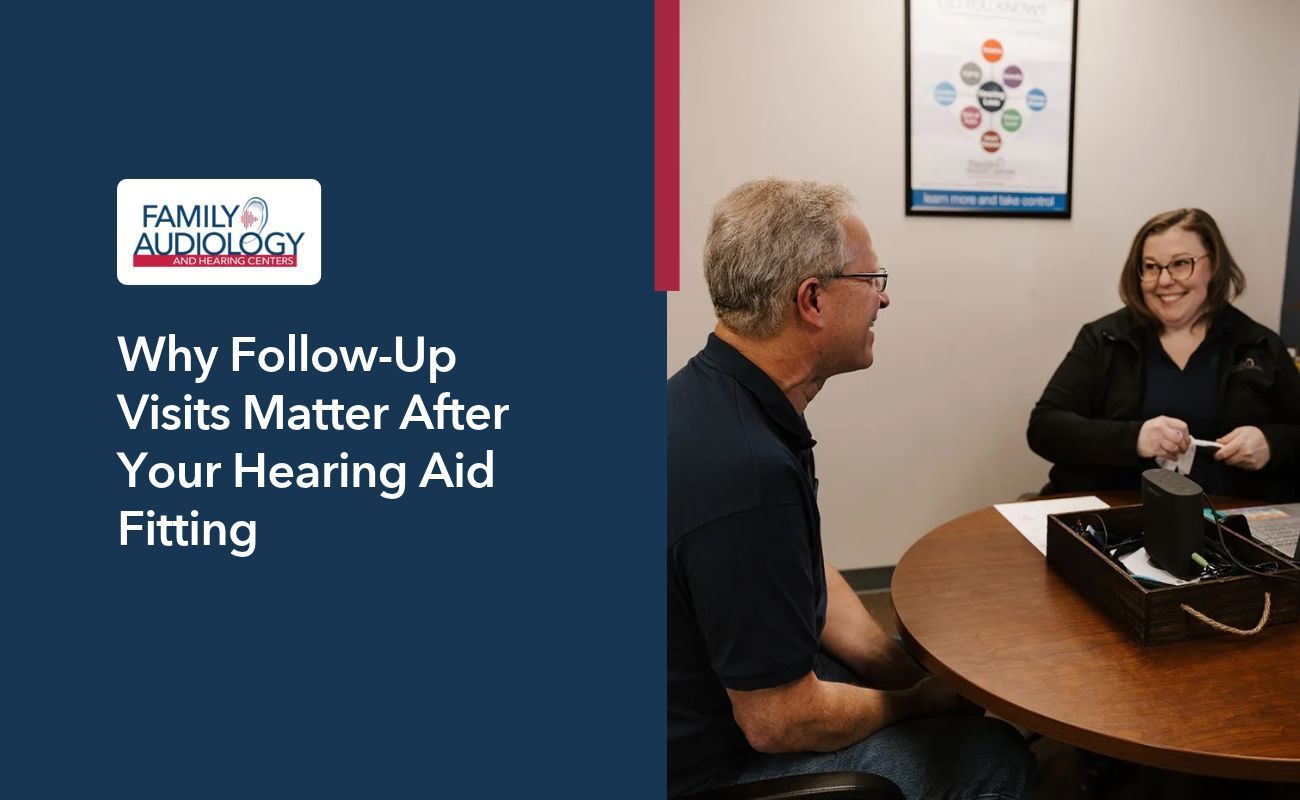
Getting fitted with new hearing aids is a big step, and many patients are surprised to learn that the fitting appointment is only the beginning. The weeks that follow are when your hearing aids start to feel like your own, and each hearing aid follow-up appointment plays a direct role in how well they work for you. At Family Audiology and Hearing Centers, we see these visits as a core part of your care.
Your Brain Needs Time to Adjust
When you first wear hearing aids, sounds you haven't heard clearly in years come back all at once. The hum of the refrigerator, the click of a turn signal, and the rustle of clothing can seem surprisingly loud. This is normal, and it reflects your brain relearning how to process sound.
That's why our team designs a phased wearing schedule for new hearing aid users. You start with a few hours a day in quiet settings, then gradually wear your hearing aids longer and in busier, noisier places. As you work through that schedule, you'll gather the real-world experience we need to fine-tune your settings at your follow-up visits.
Fine-Tuning Your Settings
At your fitting, your hearing aids are programmed to match your hearing loss profile. That programming gives you a strong starting point, but it can't predict exactly how you'll respond to the sounds of your own daily life. A follow-up appointment lets us adjust the programming based on what you've actually experienced.
During this visit, we may:
- Adjust overall volume or specific pitches that sound too sharp, too soft, or tinny
- Refine how your hearing aids handle background noise
- Set up or adjust programs for places you visit often, such as a restaurant, church, or your car
- Review the hearing aid app and Bluetooth connections to your phone or TV (if your model has them)
Small changes can make a noticeable difference, and a restaurant that felt overwhelming can become much more comfortable after a few targeted adjustments.
Checking Comfort and Fit
Physical comfort matters just as much as sound quality, because you'll get the most benefit from hearing aids you're happy to wear all day. At your follow-up appointment, we'll check how the hearing aids sit in or behind your ears and look for any spots that feel sore or irritated.
We'll also ask about whistling or feedback, which can be a sign the fit needs attention. Depending on your style of hearing aid, a fit issue may be resolved with a different dome size, a tubing adjustment, or a change to a custom earmold or shell. We'll also take a look at your ear canals, since earwax buildup can affect both comfort and performance.
Reviewing Your Real-World Experience
This part of the visit centers on your daily routine. We'll talk through the situations that matter most to you, from conversations at the dinner table to phone calls, meetings, and time with grandchildren. It helps to keep a few notes in the days before your appointment about where your hearing aids performed well and where you struggled.
We'll also review the practical side of ownership. Handling small devices takes practice, so we're glad to walk you through inserting and removing your hearing aids, charging or changing batteries, and cleaning them again. New questions often come up after the first visit, and your follow-up is a good time to ask every one of them.
How Often to Come Back
Every patient's needs are different, and your provider will recommend a schedule that fits your hearing and your hearing aids. A typical pattern looks something like this:
- One to two weeks after your fitting to review your first experiences and make initial adjustments
- More visits over the first month or two as needed, until your hearing aids feel comfortable and natural
- Routine check-ups about every six months for cleaning, inspection, and minor adjustments
- A hearing test once a year so your programming keeps pace with any changes in your hearing
Between appointments, you're always welcome to contact us if something doesn't sound right or a hearing aid stops working. Problems such as weak sound, feedback, or visible damage are easier to address early, and our team also provides hearing aid repairs.
Schedule a Hearing Aid Follow-Up Near You
Family Audiology and Hearing Centers has 17 locations across Ohio and in Onalaska, Wisconsin. Our audiologists and hearing specialists stay with you well after your fitting, checking your comfort, fine-tuning your hearing aids, and answering your questions. If you've recently been fitted with hearing aids or feel your current ones could be working better, we'd be glad to see you. Find the office nearest you on our locations page and call to schedule your hearing aid follow-up appointment today.
- How In-Ear Monitors Protect and Enhance Your Performance Custom in-ear monitors protect musicians from damaging stage volume while delivering a clearer, controlled mix than traditional floor wedge monitors. Read it
- Tinnitus and Changing Seasons: Why Ohio Patients Notice More Ringing in Fall Ohio’s fall pressure swings, ragweed allergies, quieter environments, and increased stress all combine to make tinnitus feel noticeably louder each autumn. Read it
- What Oticon Reveal's Dual AI System Mean for Ohio Patients Oticon Reveal's dual AI system balances speech clarity and environmental awareness, making it a strong option for Ohio patients seeking natural sound. Read it
Book a hearing test.
A hearing test is the most reliable way to know where your hearing stands. It takes 30 to 60 minutes, and we go through your results with you the same day. In most cases no referral is needed.