
A Guide to Understanding Your Audiogram Results
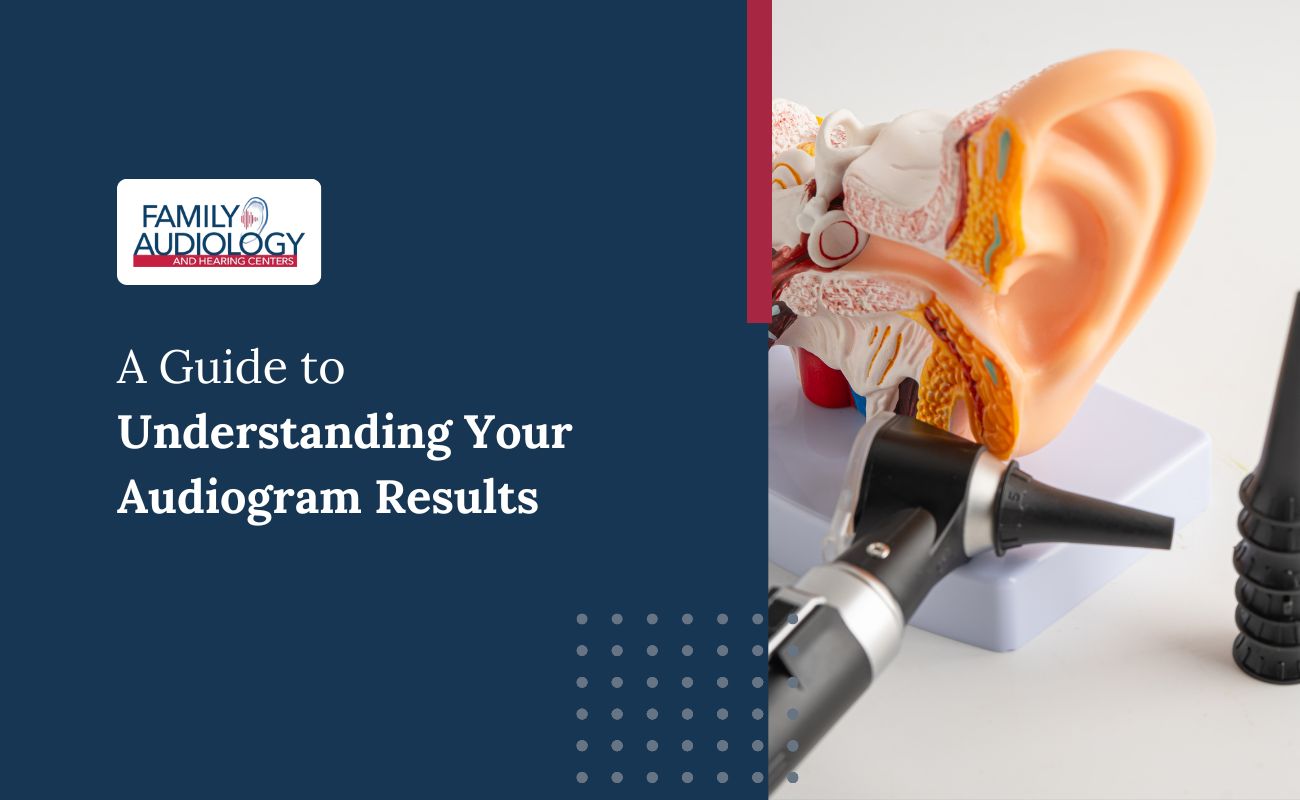


After completing a hearing test at one of our 17 locations in Ohio & Wisconsin, you'll receive an audiogram—a visual chart that maps your hearing abilities across different frequencies and volumes. While this document might look like a simple graph at first glance, it contains valuable information about your unique hearing profile. Learning to read your audiogram empowers you to better understand your hearing health and participate actively in decisions about your care.
What Is an Audiogram?
An audiogram is a standardized chart that displays the results of your hearing test. The horizontal axis represents frequency (pitch) measured in Hertz (Hz), ranging from low sounds like a bass drum to high sounds like a bird chirping. The vertical axis shows intensity (volume) measured in decibels (dB), with quieter sounds at the top and louder sounds toward the bottom.
During your hearing evaluation, our audiologists test your ability to hear various tones at different frequencies and volumes. The results are plotted on the audiogram using specific symbols. Your right ear is typically marked with an "O" and red color, while your left ear uses an "X" and blue color. This allows us to see how each ear performs independently.
Understanding Frequency Ranges
Frequency refers to the pitch of a sound. The human ear can typically detect sounds ranging from about 20 Hz to 20,000 Hz, though hearing tests usually focus on frequencies between 250 Hz and 8,000 Hz—the range most important for understanding speech.
Low frequencies (250-500 Hz) include sounds like thunder, bass guitars, and vowel sounds in speech. Mid frequencies (1,000-2,000 Hz) encompass most conversational speech sounds and are particularly important for understanding what people say. High frequencies (4,000-8,000 Hz) include consonant sounds like "s," "f," and "th," which give speech its clarity and help distinguish between similar-sounding words.
Many people with hearing loss find that certain frequency ranges are more affected than others. High-frequency hearing loss is particularly common and can make it difficult to understand speech clearly, even when the overall volume seems adequate.
Decibel Levels and Hearing Thresholds
The vertical axis of your audiogram measures sound intensity in decibels. A whisper measures around 30 dB, normal conversation occurs at about 60 dB, and a lawnmower produces roughly 90 dB. The softest sound you can hear at each frequency is your hearing threshold for that particular pitch.
Hearing thresholds between 0 and 25 dB are considered within normal limits. Mild hearing loss falls between 26 and 40 dB, meaning you might miss soft sounds or have difficulty hearing in noisy environments. Moderate hearing loss (41-55 dB) typically requires raising your voice for someone to hear you. Moderate-to-severe loss (56-70 dB) makes regular conversation challenging, while severe hearing loss (71-90 dB) requires very loud speech or shouting. Profound hearing loss (91+ dB) means even the loudest sounds may be difficult to perceive.
Types of Hearing Loss Shown on Audiograms
Your audiogram reveals not just whether you have hearing loss, but what type. Conductive hearing loss occurs when sound cannot efficiently travel through your outer or middle ear. On an audiogram, this appears as a gap between air conduction results (tested with headphones) and bone conduction results (tested with a small device placed behind your ear). This type of hearing loss often responds well to medical treatment.
Sensorineural hearing loss stems from damage to the inner ear or auditory nerve. When both air and bone conduction thresholds show similar hearing loss, this indicates a sensorineural issue. This is the most common type of permanent hearing loss and typically benefits from hearing aids.
Mixed hearing loss combines both conductive and sensorineural components, appearing as bone conduction showing some hearing loss with air conduction showing even more significant loss.
The Speech Banana
One helpful way to interpret your audiogram involves the "speech banana"—a banana-shaped region on the chart that represents where most speech sounds fall. This area typically spans from about 250 Hz to 8,000 Hz and from 0 to 60 dB.
If your hearing thresholds fall within or above this region, you can likely hear most speech sounds. However, if your thresholds drop below the speech banana, you'll miss certain sounds in conversation. For example, someone with high-frequency hearing loss might hear the vowels in a word but miss the consonants, making "cat" sound like "at" or "sat" sound like "at."
What Your Results Mean for Daily Life
Understanding your audiogram helps explain real-world listening challenges. If your audiogram shows good low-frequency hearing but high-frequency loss, you might notice that you can hear people talking but struggle to understand what they're saying, especially women's and children's voices or in background noise.
Asymmetrical hearing loss—where one ear hears better than the other—can make it difficult to locate where sounds are coming from. A flat hearing loss across all frequencies might affect your overall volume perception, while a sloping loss primarily affecting high frequencies creates specific clarity issues.
Using Your Audiogram for Treatment Planning
At Family Audiology and Hearing Centers, we use your audiogram as a roadmap for personalized care. When hearing aids are recommended, your audiogram guides our audiologists in programming devices specifically for your hearing loss pattern. We select appropriate amplification levels for each frequency, ensuring you receive the sounds you're missing without over-amplifying those you already hear well.
Our team uses Real Ear Measurement during hearing aid fittings, verifying that your devices match your prescription based on your audiogram. This verification process ensures optimal performance tailored to your unique hearing profile.
The Importance of Baseline Testing
Even if your first audiogram shows normal hearing, it establishes a valuable baseline for future comparisons. Hearing changes gradually over time, and having previous results allows our audiologists to identify subtle shifts that might otherwise go unnoticed. Regular testing every one to three years helps track these changes and enables early intervention when needed.
Schedule Your Hearing Test Today
Understanding your audiogram is the first step toward better hearing health. At Family Audiology and Hearing Centers, our experienced audiologists take time to thoroughly explain your results and answer all your questions. We help you understand exactly what your audiogram reveals and what it means for your daily communication.
If you're experiencing difficulty hearing or haven't had your hearing tested recently, we invite you to schedule a comprehensive hearing evaluation at one of our 17 convenient locations across Ohio and Wisconsin. Our team is ready to provide the personalized care and expert guidance you deserve. Contact us today to take control of your hearing health.

Discover the Latest Articles
Stay informed with our informative articles.

What Oticon Reveal's Dual AI System Mean for Ohio Patients

How Ohio Patients Are Using AI Hearing Aids at Work and Home
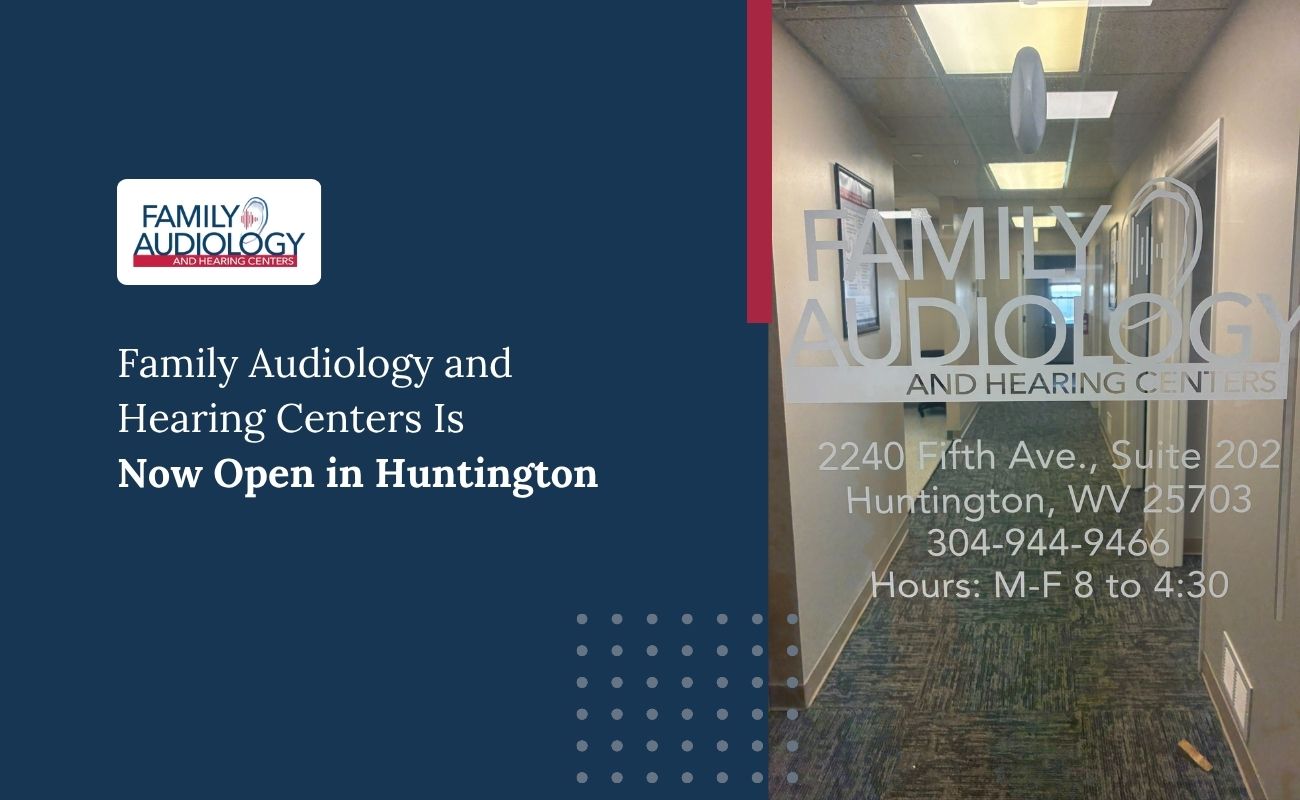
Family Audiology and Hearing Centers Is Now Open in Huntington, WV
Contact your local Hearing Aid Specialists
At Family Audiology and Hearing Centers, we strive to be there for all your family’s hearing needs. Because of this, we have 18 convenient locations in Ohio and Wisconsin for you to visit. See which location is best for you and schedule an appointment today.